From online order to kitchen: a clearer workflow for takeaways
Postree Blog · Online Ordering · September 2026
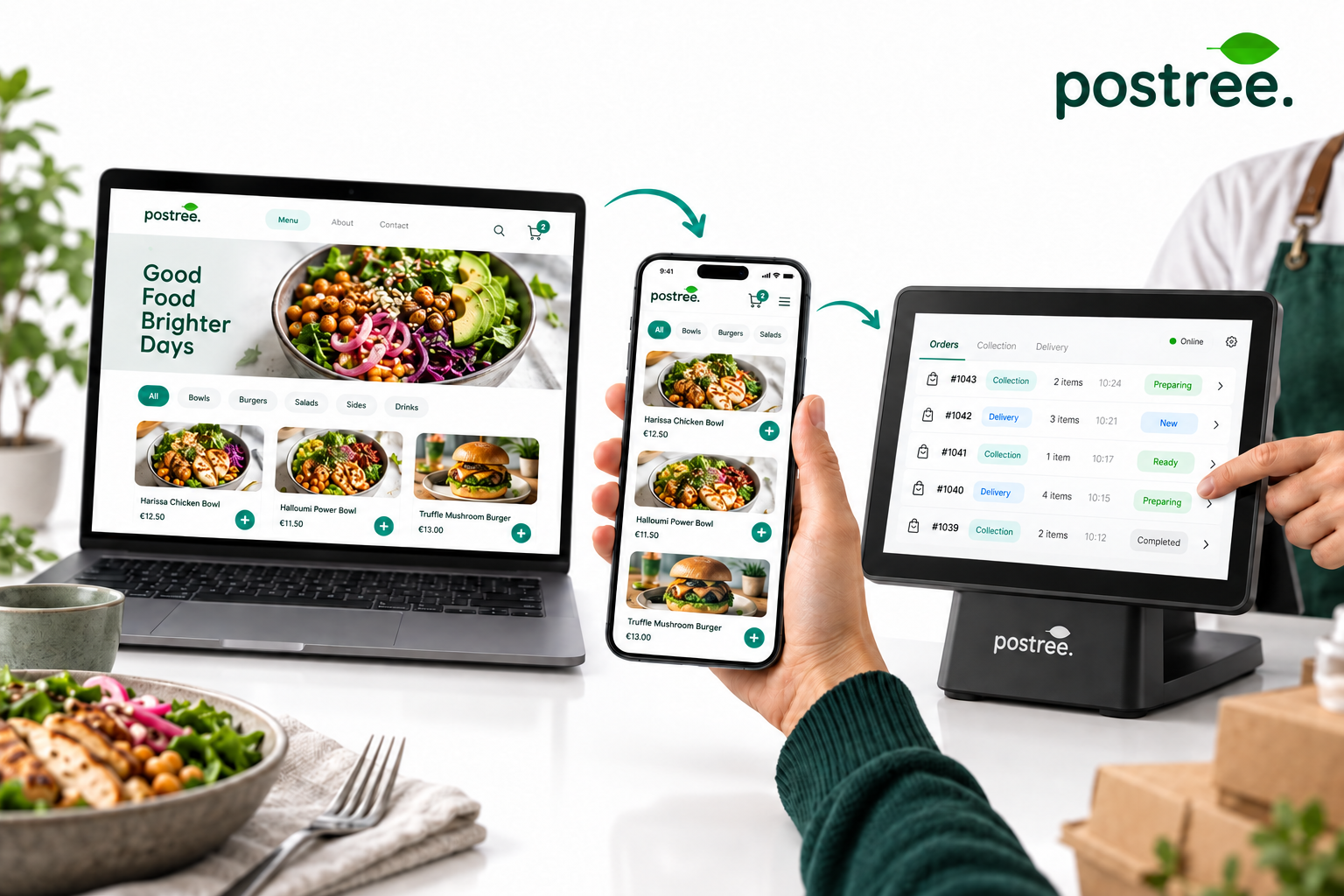
For a takeaway, the evening rush can begin on several screens at once. A customer orders through the website, another calls the shop and a delivery-platform notification sounds while a collection customer is waiting. The challenge is keeping every order clear from acceptance to handover.
Postree Online Ordering gives customers a branded route to order for collection or delivery, with orders sent into the POS workflow. Supported delivery integrations can bring additional channels into that same operational view.
The use case: Friday evening collection and delivery
Imagine a takeaway where one person watches online channels and types the orders into the till. As demand rises, that person becomes a bottleneck. A modifier may be copied incorrectly, or a collection order may reach the kitchen later than expected.
In a connected setup, direct orders arrive from the Postree website without being re-entered. Staff can focus on reviewing requests, managing preparation and handing over the correct order. The website remains recognisably the takeaway’s own, using its branding and menu.
The solution: direct ordering with a connected till
A useful rollout starts with accurate menu information, sensible collection windows and clearly defined delivery coverage. Make item choices and quantities easy to review before checkout. Test an ordinary order and one with a special instruction so the team can see how both appear at the POS.
Postree lists integrations with Just Eat, Uber Eats, Deliveroo and Flipdish. Confirm the channels available for your venue and agree how acceptance, changes and unavailable items will be handled. The important test is the complete order journey, not simply whether a platform name appears on a list.
Where the efficiency comes from
Removing manual re-entry reduces the number of times staff handle the same information. A shared workflow can also make it easier to distinguish collection from delivery and respond to a customer asking about an order.
That does not remove the need to manage capacity. If the kitchen can prepare only a certain number of meals in a period, collection promises should reflect that. Connecting orders makes demand easier to see; the team still needs a service plan.
Useful beyond the takeaway counter
Cafés can use direct ordering for advance lunch collections. Restaurants can support customers who want to eat their favourite dishes at home. A bakery can provide a clearer route for customers ordering ahead rather than calling during the morning queue.
Measure how many orders require retyping, how often staff correct an order and how closely collection handovers match the time offered to customers. Review those measures alongside channel sales, rather than judging the system on order volume alone.
Ask Postree to demonstrate a website order and a supported delivery order arriving at the till. Review current fees and channel requirements for your own setup before launch.